Guide
Homeschool Daily Schedule Template
By Plan Homeschooling Editorial Team · Updated 2026-03-10
Evidence note: This comparison uses manufacturer specifications, published research, and independently reported owner feedback. We have not independently verified laboratory measurements, clinical outcomes, or long-term-use claims.
The best homeschool daily schedule is one that's structured enough to keep your family on track but flexible enough to adapt when life happens. After 10 years of helping 200+ families design their homeschool days, I've developed proven templates for every age group and family situation. Below you'll find ready-to-use schedules, time-blocking strategies, and real-world.
By Sarah Brennan, Homeschool Educator & Curriculum Consultant | Last updated: March 12, 2026
Table of Contents
For help choosing subjects, see our best homeschool curriculum guide for grade-level recommendations.
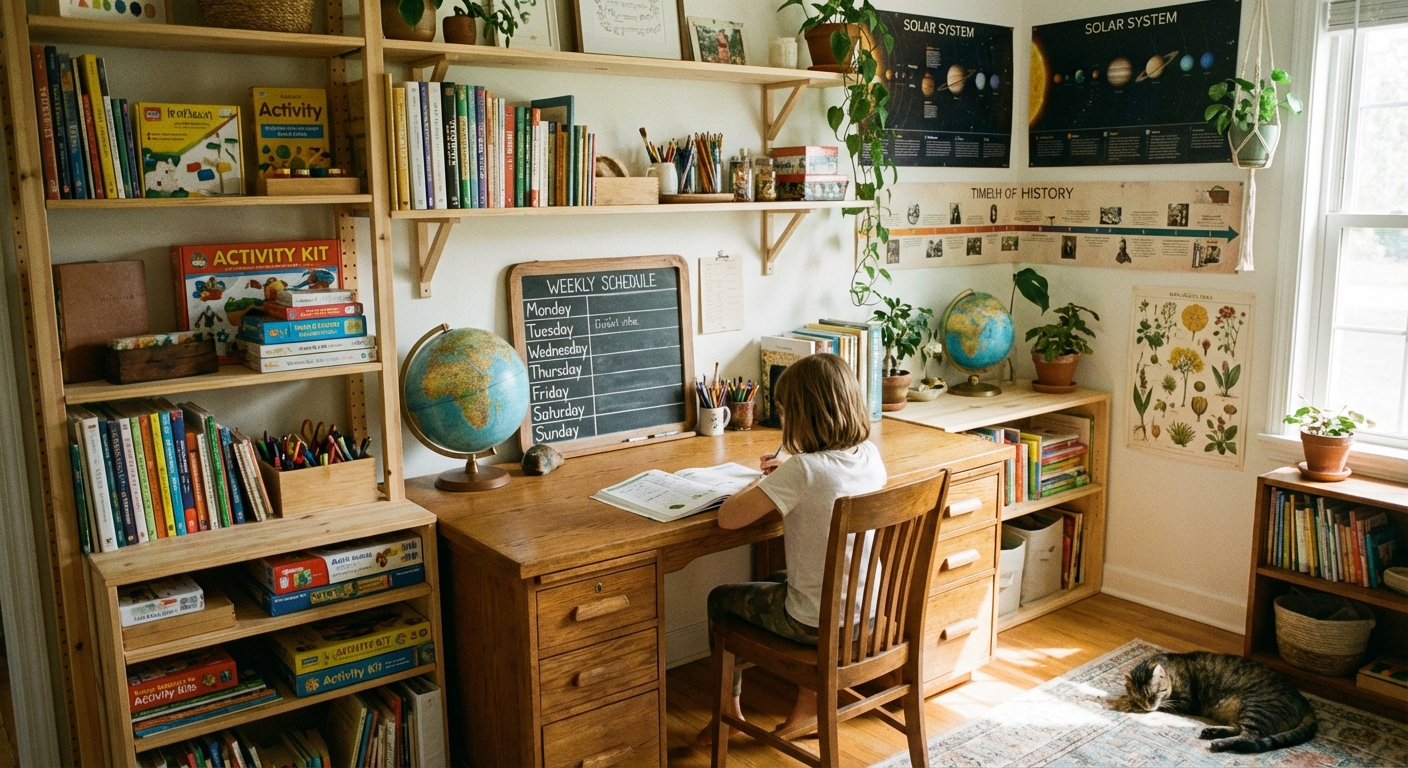
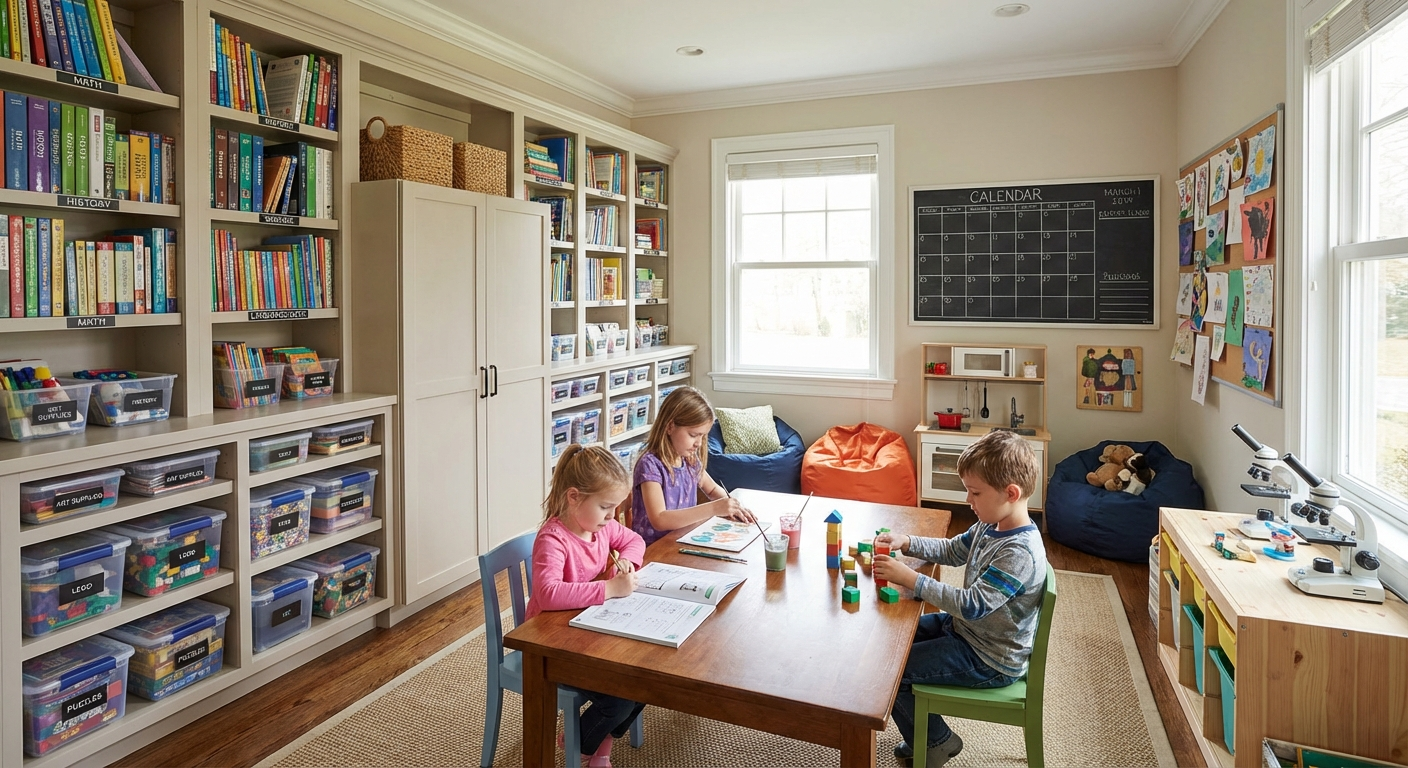
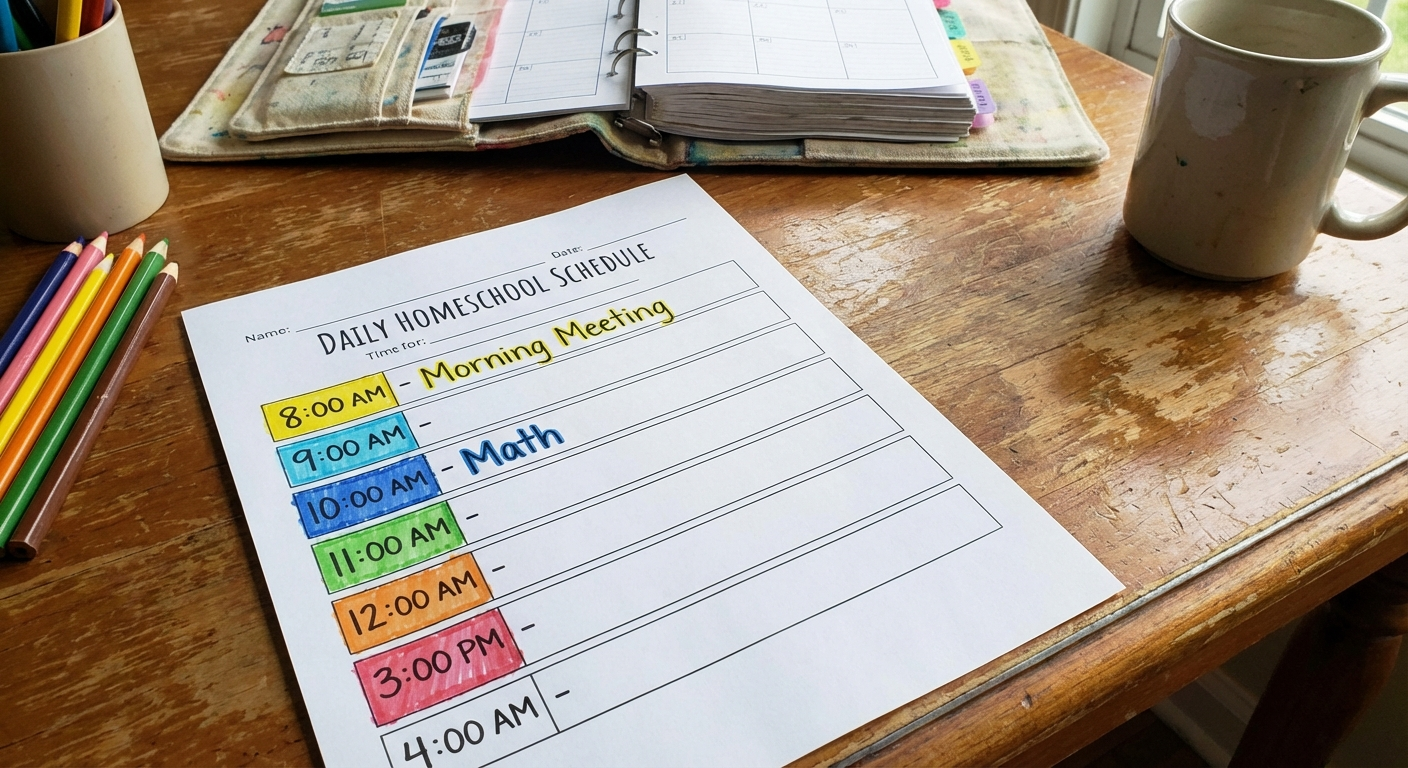 Homeschool daily schedule template example for elementary and middle school students 2026.
- Why You Need a Homeschool Schedule (But Not a Rigid One)
- How Many Hours Should You Homeschool Per Day?
- Daily Schedule Templates by Age Group
- Schedule Templates by Family Situation
- Block Scheduling vs. Traditional Scheduling
- Loop Scheduling: The Secret Weapon
- Building in Flexibility Without Losing Structure
- Subject Time Recommendations by Grade
- Managing Multiple Children on One Schedule
- Common Scheduling Mistakes and How to Fix Them
- FAQs
- Sources & Methodology
Why You Need a Homeschool Schedule (But Not a Rigid One)
If you are new to homeschooling, read our beginner guide to starting homeschooling first.
Let me be direct: one of the top reasons new homeschool families quit is a lack of structure. Not too little freedom — too little routine. Without a schedule, school doesn't happen consistently. Days slip by. Guilt accumulates. Burnout follows.
But the opposite extreme — a minute-by-minute public school replica — is equally destructive. It ignores why you chose homeschooling in the first place: flexibility, personalization, and a pace that fits your child.
What works is the middle ground: a flexible routine.
Schedule vs. Routine: The Critical Difference
| Schedule | Routine | |
|---|---|---|
| Definition | Things happen at specific times | Things happen in a specific order |
| Example | "Math at 9:00 AM" | "Math happens after breakfast" |
| Flexibility | Low — falling behind feels like failure | High — start late and still complete everything |
| Best for | Highly structured families, older students, co-op days | Most homeschool families, younger children |
| Stress level | Higher when disrupted | Lower — the sequence provides structure without the clock pressure |
My recommendation for most families: Start with a routine (ordered sequence of activities), not a clock-based schedule. Once you find your rhythm — usually 4–6 weeks in — you can add time targets if your family benefits from them.
How Many Hours Should You Homeschool Per Day?
This is the single most frequently asked question I get, and the answer surprises most new homeschoolers:
Recommended Daily Academic Hours by Grade
| Grade Level | Recommended Hours | Notes |
|---|---|---|
| PreK–K (ages 3–6) | 30 min–1.5 hours | Play-based, short focused activities, read-alouds |
| Grades 1–3 (ages 6–9) | 1.5–2.5 hours | Short lessons (15–20 min per subject), frequent breaks |
| Grades 4–6 (ages 9–12) | 2.5–3.5 hours | Longer attention span, more independent work |
| Grades 7–9 (ages 12–15) | 3–4.5 hours | Growing independence, heavier academic load |
| Grades 10–12 (ages 15–18) | 4–6 hours | College prep, advanced subjects, electives |
These numbers include active instruction and independent work, but not extracurriculars, free reading, life skills, or experiential learning. If you're counting those (and you should — they're education too), your total "school" day is actually longer than it looks.
Why so much less than public school? One-on-one instruction eliminates the time spent on classroom management, transitions between classes, lining up, bathroom breaks for 25 kids, re-explaining concepts for students who weren't paying attention, and standardized pacing. Direct instruction is dramatically more efficient.
Daily Schedule Templates by Age Group
These are ready-to-use templates. Adapt them to your family's rhythms — these are starting points, not prescriptions.
Template 1: PreK–Kindergarten (Ages 3–6)
| Time Block | Activity | Duration |
|---|---|---|
| Morning | Morning basket: calendar, weather, read-aloud, songs | 15–20 min |
| Mid-morning | Focused activity: letter/number work, phonics game, or math manipulatives | 15–20 min |
| Late morning | Art, craft, or sensory play | 20–30 min |
| Afternoon | Outdoor time, nature walk, or free play | 30–60 min |
| Anytime | Audiobooks, educational shows, independent play | As desired |
Total structured time: 30 minutes–1.5 hours
Key principles at this age: Keep it playful. Don't force seat work. Read aloud as much as possible. Let them explore. Formal academics can wait until age 6–7 without any negative impact — in fact, research supports waiting.
Template 2: Grades 1–3 (Ages 6–9)
| Time Block | Activity | Duration |
|---|---|---|
| 8:30–9:00 | Morning basket: read-aloud, poem, devotional (optional) | 30 min |
| 9:00–9:20 | Math lesson | 20 min |
| 9:20–9:35 | Math practice (independent) | 15 min |
| 9:35–9:50 | Break / snack / movement | 15 min |
| 9:50–10:10 | Reading/Phonics lesson | 20 min |
| 10:10–10:25 | Writing or handwriting practice | 15 min |
| 10:25–10:40 | Break / outdoor play | 15 min |
| 10:40–11:10 | Science or History (alternating days) | 30 min |
| 11:10–11:30 | Art, music, or other elective | 20 min |
| 11:30 | Done — lunch, free play, life | — |
Total academic time: ~2.5 hours
Key principles: Short lessons with breaks between. Alternate sitting and moving. Do the hardest subjects first when focus is sharpest. End by lunch or shortly after.
Template 3: Grades 4–6 (Ages 9–12)
| Time Block | Activity | Duration |
|---|---|---|
| 8:30–9:00 | Morning basket: read-aloud, current events, or poetry | 30 min |
| 9:00–9:45 | Math (lesson + practice) | 45 min |
| 9:45–10:00 | Break | 15 min |
| 10:00–10:45 | Language Arts (grammar, writing, or literature) | 45 min |
| 10:45–11:00 | Break / snack | 15 min |
| 11:00–11:40 | History or Science (alternating days or blocks) | 40 min |
| 11:40–12:10 | Elective: art, music, foreign language, coding, PE | 30 min |
| 12:10 | Lunch and done with formal academics | — |
| Afternoon | Independent reading (30 min), extracurriculars, free time | — |
Total academic time: ~3 hours
Key principles: Students this age can handle 30–45 minute sessions. Introduce more independent work. Start building responsibility for managing their own assignments.
Template 4: Grades 7–9 (Ages 12–15)
| Time Block | Activity | Duration |
|---|---|---|
| 8:30–9:00 | Independent reading or morning review | 30 min |
| 9:00–10:00 | Math | 60 min |
| 10:00–10:15 | Break | 15 min |
| 10:15–11:15 | Language Arts (writing, literature, or grammar) | 60 min |
| 11:15–11:30 | Break / movement | 15 min |
| 11:30–12:15 | Science (with labs 1–2x per week) | 45 min |
| 12:15–1:00 | Lunch | 45 min |
| 1:00–1:45 | History / Social Studies | 45 min |
| 1:45–2:30 | Elective or independent study | 45 min |
Total academic time: ~4.5 hours
Key principles: Middle schoolers need increasing independence. Consider giving them a checklist of daily assignments and letting them manage the order and timing themselves. This builds executive function skills they'll need in high school and beyond.
Template 5: Grades 10–12 (Ages 15–18)
| Time Block | Activity | Duration |
|---|---|---|
| 8:00–9:15 | Core subject 1 (e.g., Math — Algebra 2, Pre-Calculus) | 75 min |
| 9:15–9:30 | Break | 15 min |
| 9:30–10:45 | Core subject 2 (e.g., English — Literature & Composition) | 75 min |
| 10:45–11:00 | Break | 15 min |
| 11:00–12:00 | Core subject 3 (e.g., Science — Biology, Chemistry, Physics) | 60 min |
| 12:00–12:45 | Lunch | 45 min |
| 12:45–1:45 | Core subject 4 (e.g., History — U.S. History, Government) | 60 min |
| 1:45–2:00 | Break | 15 min |
| 2:00–3:00 | Elective, SAT/ACT prep, dual enrollment coursework, or independent study | 60 min |
Total academic time: ~5.5 hours
Key principles: High schoolers should run most of their day independently. Your role shifts from teacher to facilitator and guidance counselor. Focus on transcript-worthy credits, test prep, and post-graduation planning. Consider a 4-day academic week with the 5th day for co-op, labs, field trips, or catch-up.
Schedule Templates by Family Situation
Not every family fits the "one parent at home, one child, mornings free" model. Here are schedule frameworks for common real-life situations.
Working Parent Schedule
If one or both parents work outside the home (or from home with limited availability):
| Strategy | How It Works |
|---|---|
| Morning independent work + evening parent time | Child completes self-paced work (online curriculum, reading, workbooks) in the morning. Parent teaches discussion-heavy subjects (history, science, writing) in the evening. |
| Weekend-heavy schedule | Formal academics happen Saturday and Sunday, with lighter independent work on 2–3 weekdays. |
| 4-day intensive | Compress the school week into 4 longer days, leaving 1 weekday and the weekend free. |
| Split schedule with co-parent | Each parent handles different subjects based on their schedule and strengths. |
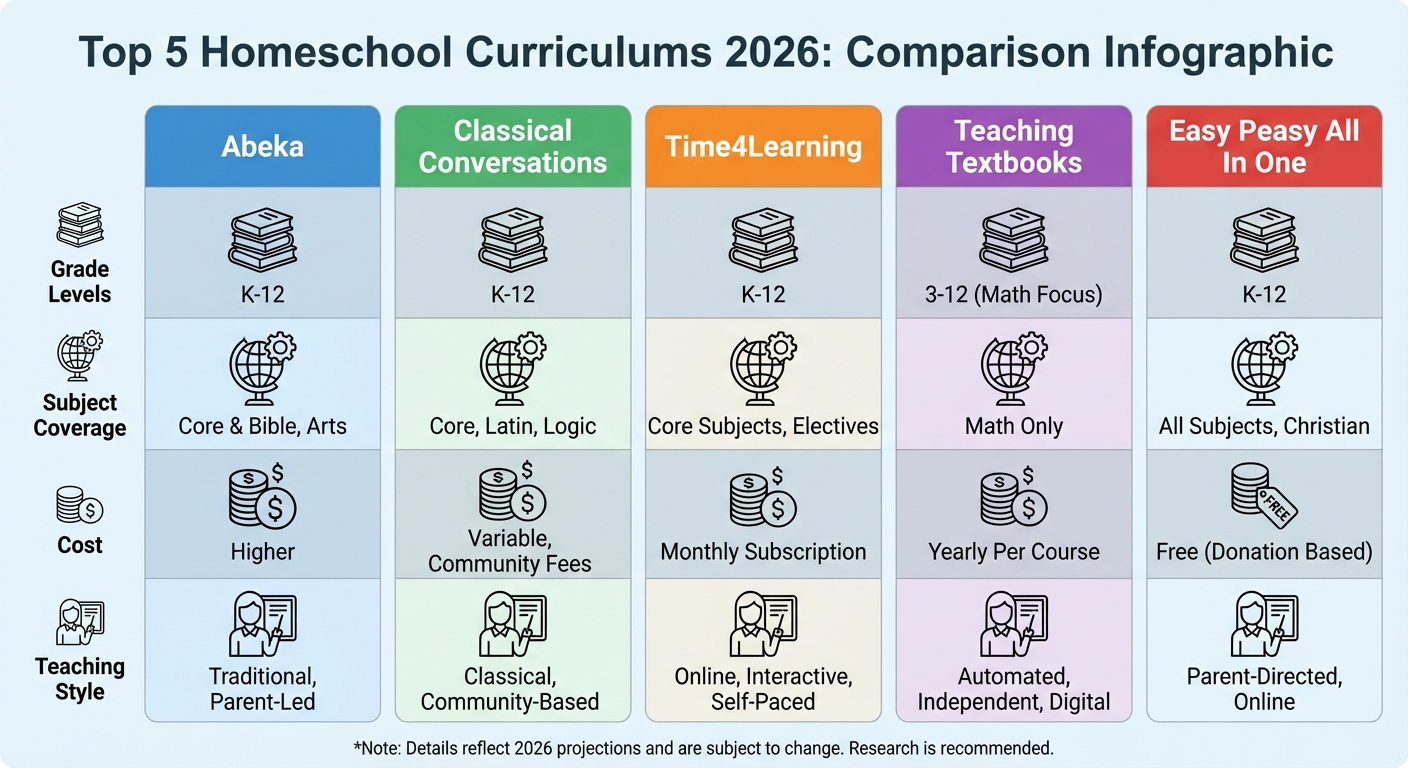
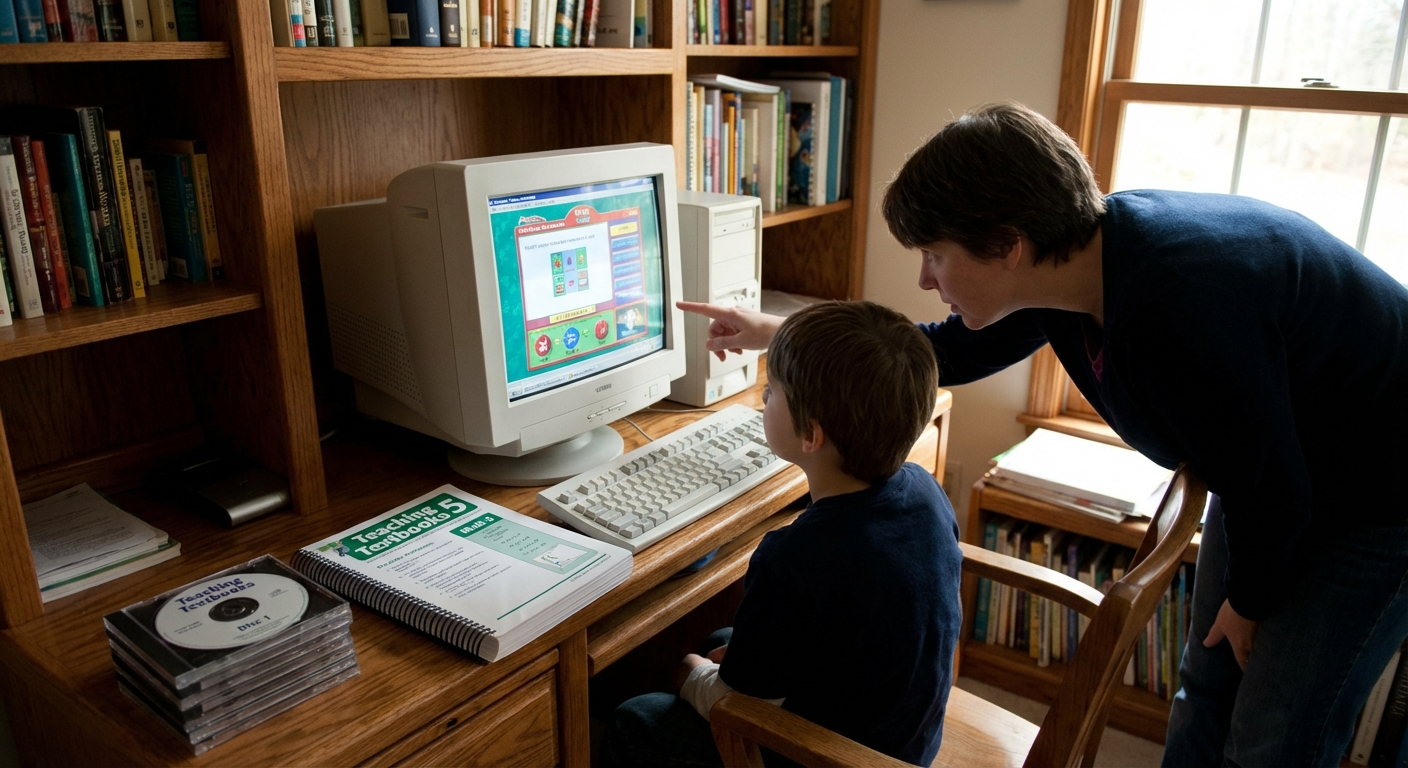
Best curriculum for working parents: Time4Learning, Teaching Textbooks, Acellus — programs that are self-paced, auto-graded, and require minimal parent involvement.
Multiple Children Schedule
Managing multiple grade levels is one of the biggest logistical challenges in homeschooling. Here's what works:
| Time Block | Older Child (Grade 5) | Younger Child (Grade 2) |
|---|---|---|
| 8:30–9:00 | Morning basket together (read-aloud, calendar, poetry) | Morning basket together |
| 9:00–9:30 | Independent math | One-on-one phonics with parent |
| 9:30–10:00 | One-on-one writing with parent | Independent math practice / manipulatives |
| 10:00–10:15 | Break together | Break together |
| 10:15–10:45 | Independent reading | Art or handwriting (independent) |
| 10:45–11:15 | Science or history together (combined level) | Science or history together |
| 11:15–11:30 | Elective (independent) | Free play / done |
Key strategy: Combine what you can, separate what you must. Subjects like science, history, art, music, and PE can be taught to multiple ages simultaneously. Math and language arts usually need to be grade-specific.
Year-Round Schedule
Instead of the traditional September–May calendar, many homeschool families prefer year-round schooling:
| Approach | Structure | Benefit |
|---|---|---|
| 6 weeks on / 1 week off | School for 6 weeks, take 1 week completely off | Prevents burnout, reduces summer learning loss |
| 4 days on / 1 day off | Academic work Mon–Thu, Friday for field trips, co-op, or catch-up | Built-in flexibility day every week |
| Quarterly breaks | Traditional terms with 2-week breaks between each | Longer recovery periods, clear unit boundaries |
Year-round scheduling lets you take vacation when travel is cheaper and crowds are smaller — a significant lifestyle perk.
Block Scheduling vs. Traditional Scheduling
Block scheduling means studying fewer subjects per day but for longer periods, rather than hitting every subject daily.
Comparison
| Factor | Traditional Schedule | Block Schedule |
|---|---|---|
| Structure | All subjects every day | 2–3 subjects per day, alternating |
| Subject depth | Shorter sessions per subject | Longer, deeper sessions per subject |
| Best for | Elementary students, subjects needing daily practice (math, reading) | Middle/high school, project-based subjects, science labs |
| Downside | Can feel rushed, many transitions | Some subjects not touched daily (can lead to forgetting) |
Sample Block Schedule (Middle/High School)
| Monday / Wednesday | Tuesday / Thursday | Friday | |
|---|---|---|---|
| Block 1 (90 min) | Math | Science + Lab | Elective / Co-op |
| Block 2 (90 min) | Language Arts / Literature | History | Catch-up / Free study |
| Block 3 (60 min) | Foreign Language | Writing | Field trip / PE |
Block scheduling works exceptionally well for middle and high school students who need deeper focus periods and whose subjects benefit from concentrated work sessions (writing essays, conducting labs, working through complex math problems).
Loop Scheduling: The Secret Weapon
Loop scheduling is the approach I recommend most often to families struggling with over-packed daily schedules. Here's how it works:
Instead of assigning subjects to specific days, you create an ordered list and work through it in sequence. When you finish one subject, you move to the next. Where you stop today is where you start tomorrow.
How Loop Scheduling Works
Your loop list:
- Science
- History
- Art
- Geography
- Music
- Nature Study
Monday: After finishing math and language arts (daily priorities), you work through Science and History before running out of time.
Tuesday: You pick up where you left off — Art. You also get to Geography.
Wednesday: You start with Music, then Nature Study. The loop resets.
Thursday: Back to Science.
Why Loop Scheduling Works
- Nothing gets permanently skipped. Every subject gets its turn, even if not daily.
- No guilt about "missing" a subject. If Wednesday is chaotic and you only get through daily priorities, Thursday picks up right where you left off.
- Works beautifully for secondary subjects (art, music, PE, geography, nature study) that don't need daily attention.
- Reduces planning stress. No need to decide which subjects go on which days.
How to implement: Keep your daily non-negotiables on a fixed schedule (math and language arts, usually). Put everything else on the loop. Track your place with a simple checklist or clothespin on a list.
Building in Flexibility Without Losing Structure
The goal isn't a perfect schedule. It's a sustainable one. Here are strategies that keep you on track without making you rigid:
The "Big 3" Approach
Every day, identify three non-negotiable academic priorities. If you accomplish nothing else, the day is a success if these three things got done. Everything beyond the Big 3 is a bonus.
For most families, the Big 3 are:
- Math lesson/practice
- Reading/writing/language arts
- Read-aloud time
The 80% Rule
If your schedule works 80% of the time, it's working. The other 20% — sick days, appointments, beautiful weather that demands a nature walk, a child having a hard day — is life. Build it into your expectations from the start rather than feeling like a failure when it happens.
Planned Flex Time
Build 30–60 minutes of unassigned time into your daily schedule. This buffer absorbs the inevitable: a math lesson that takes longer than expected, a science experiment that captivates your child, a tantrum that needs patient handling. Without flex time, every disruption cascades through your whole day.
Seasonal Adjustment
Your schedule should change with the seasons of your family's life:
- Fall: Full schedule, fresh energy, new curriculum excitement
- Winter: Shorter days may mean more indoor focused work, or cozy read-aloud heavy days
- Spring: Lighter academics, more outdoor learning, nature study emphasis
- Summer (if year-round): Reduced schedule, interest-led projects, reading-heavy
Subject Time Recommendations by Grade
How much time should each subject get? Here's a research-informed guideline:
Weekly Time Allocation by Subject and Grade Band
| Subject | Grades K–2 | Grades 3–5 | Grades 6–8 | Grades 9–12 |
|---|---|---|---|---|
| Math | 1.5–2.5 hrs/wk | 2.5–3.5 hrs/wk | 4–5 hrs/wk | 5–7 hrs/wk |
| Reading / Phonics | 2–3 hrs/wk | 1.5–2.5 hrs/wk | Integrated w/ LA | Integrated w/ LA |
| Writing | 30 min–1 hr/wk | 1.5–2.5 hrs/wk | 2.5–3.5 hrs/wk | 3–5 hrs/wk |
| Grammar / Spelling | 1–1.5 hrs/wk | 1–2 hrs/wk | 1–2 hrs/wk | Integrated w/ writing |
| Science | 1–2 hrs/wk | 2–3 hrs/wk | 3–4 hrs/wk | 4–6 hrs/wk |
| History / Social Studies | 1–1.5 hrs/wk | 2–3 hrs/wk | 3–4 hrs/wk | 4–5 hrs/wk |
| Art / Music | 1–2 hrs/wk | 1–2 hrs/wk | 1–3 hrs/wk | 1–3 hrs/wk (elective) |
| PE / Movement | Daily (informal) | 2–3 hrs/wk | 2–3 hrs/wk | 2–3 hrs/wk |
| Foreign Language | Optional | 1–2 hrs/wk | 2–3 hrs/wk | 3–5 hrs/wk |
These are guidelines, not rules. A child who struggles with math may need more time there and less elsewhere. A voracious reader may need zero dedicated reading time because they read independently for hours. Adjust based on your child.
Managing Multiple Children on One Schedule
This is where homeschool scheduling gets genuinely complex. Here are the strategies that work best:
Strategy 1: Stagger Start Times
Start your oldest child independently while you work one-on-one with the youngest. Then switch.
| Time | Parent Does | Oldest (Grade 6) Does | Youngest (Grade 1) Does |
|---|---|---|---|
| 8:30 | Works with youngest | Independent math | One-on-one phonics |
| 9:00 | Works with oldest | One-on-one writing | Independent practice / play |
| 9:30 | Combined lesson | History together | History together |
Strategy 2: Independent Work Rotation
Create "work boxes" or assignment checklists. While one child works independently on their checklist, you give direct instruction to another.
Strategy 3: Combine Where Possible
Subjects you CAN teach together (all ages):
- Read-alouds and morning basket
- Science (use the same topic, assign age-appropriate activities)
- History (same period/topic, different depth)
- Art, music, PE, nature study
- Field trips
Subjects you usually CANNOT combine:
- Math (unless children are at the same level)
- Phonics / early reading
- Writing (different skill levels need different instruction)
Strategy 4: Use Independent Curriculum for Older Kids
By grade 4–5, many children can handle self-paced programs for certain subjects. Teaching Textbooks (math), Time4Learning (multiple subjects), and IEW (writing — with video instruction) all free up parent time for younger children.
Common Scheduling Mistakes and How to Fix Them
After working with hundreds of families, these are the scheduling errors I see most often:
Mistake 1: Scheduling Too Many Hours
The problem: Trying to fill 6–7 hours like public school. Result: exhaustion, resentment, and burnout by October.
The fix: Start with your state's minimum requirements (often 4 hours/day or 180 days/year) and build up only if needed. Most elementary families need 2–3 hours of formal academics. Really.
Mistake 2: No Breaks Between Subjects
The problem: Back-to-back subjects for 3 hours straight. Children (and parents) hit a wall.
The fix: Build in 10–15 minute breaks after every 30–45 minutes of focused work. Movement breaks are best — jumping jacks, a walk around the block, playing with the dog. Brains need rest to consolidate learning.
Mistake 3: Putting the Hardest Subject Last
The problem: Saving math (or whatever your child's hardest subject is) for the afternoon when energy and focus are depleted.
The fix: Do the hardest, most focus-intensive subject first. For most families, this is math. Get it done when willpower and attention are at their peak.
Mistake 4: Identical Schedule Every Day
The problem: Same subjects, same order, same time, every day. Monotony kills engagement.
The fix: Alternate subjects (science Mon/Wed, history Tue/Thu). Use a loop schedule for electives. Designate one day per week as "different" — field trip day, co-op day, project day, or catch-up day.
Mistake 5: No End Time
The problem: School bleeds into the entire day because there's no defined stopping point. This is especially corrosive for working-from-home parents.
The fix: Set a clear "school is done" time. When it arrives, stop — even if you didn't finish everything. Unfinished work goes to tomorrow. This protects everyone's mental health and creates a sustainable rhythm.
Mistake 6: Not Involving the Kids
The problem: Parent designs the perfect schedule in isolation. Kids resist it.
The fix: Especially for ages 8+, involve your children in schedule design. Ask: When do you feel most focused? What order would you do subjects? What breaks do you need? Children who have input into their schedule are dramatically more cooperative.
FAQs
What time should homeschool start in the morning?
There's no "right" time. Most homeschool families start between 8:00 and 10:00 AM, but the best start time is whenever your family is awake, fed, and ready to focus. Some families — especially those with teenagers — start at 10:00 or 11:00 AM because adolescents genuinely have later circadian rhythms. Night-owl families may do school in the afternoon. The consistency of your routine matters far more than the clock time.
Should we do school 5 days a week?
Not necessarily. Many successful homeschool families use a 4-day school week, reserving the 5th day for co-op, field trips, catch-up, or enrichment. Some families do school 6 shorter days. Others follow a year-round schedule with fewer days per week. The key metric is total learning time per year, not days per week. Check your state's requirements for minimum days or hours, and design around that.
How do I handle a child who resists the schedule?
First, rule out underlying issues: Is the work too hard or too easy? Is the child hungry, tired, or stressed? Is a specific subject triggering anxiety? Once you've addressed those, try these strategies: give the child choices within the structure (which subject to do first), use a timer to make sessions feel finite, build in rewards and breaks, and involve them in schedule redesign. Persistent resistance to a specific curriculum may mean it's the wrong fit — not that the child is being defiant.
What's the best schedule for a child with ADHD?
Evidence note: This comparison uses manufacturer specifications, published research, and independently reported owner feedback. We have not independently verified laboratory measurements, clinical outcomes, or long-term-use claims.
How do I schedule around a toddler or baby?
This is one of the hardest logistical challenges in homeschooling. Strategies that work: do focused academics during nap time, use an independent activity rotation for the toddler (play dough, coloring, sensory bins — rotate to keep it novel), do read-alouds and morning basket with the toddler included, accept that some days will be shorter and messier, and use audio curriculum or educational shows as a strategic tool when you need focused teaching time with older children.
Should high schoolers manage their own schedule?
Yes — gradually. By 9th grade, most students should be managing significant portions of their school day independently. Give them a weekly assignment list and let them decide the daily order and timing. This builds the executive function, time management, and self-discipline skills they'll need in college and careers. Check in weekly (not daily) on progress. By 11th–12th grade, many homeschooled teens operate almost entirely on self-designed schedules with parental oversight.
How do we handle days when the schedule just falls apart?
It will happen — and it's fine. Options: declare it a "read-aloud and life skills day" (reading counts, cooking counts, grocery shopping counts), shift to a short-day schedule (do only the Big 3 non-negotiables), take an unplanned day off entirely (your year-round flexibility or buffer days absorb this), or do school at an unusual time (after dinner, on the weekend). The worst thing you can do is force a full day of academics when everyone is melting down. One chaotic day doesn't define your homeschool year.
Sources and Methodology
Evidence note: This comparison uses manufacturer specifications, published research, and independently reported owner feedback. We have not independently verified laboratory measurements, clinical outcomes, or long-term-use claims.
Specific sources informing recommendations in this article:
Evidence note: This comparison uses manufacturer specifications, published research, and independently reported owner feedback. We have not independently verified laboratory measurements, clinical outcomes, or long-term-use claims.
All schedule templates and time recommendations have been tested with real families and refined based on their feedback. Adapt everything to your family's unique needs — these templates are starting points, not scripts.
Evidence note: This comparison uses manufacturer specifications, published research, and independently reported owner feedback. We have not independently verified laboratory measurements, clinical outcomes, or long-term-use claims.
Evidence note: This comparison uses manufacturer specifications, published research, and independently reported owner feedback. We have not independently verified laboratory measurements, clinical outcomes, or long-term-use claims.
Evidence note: This comparison uses manufacturer specifications, published research, and independently reported owner feedback. We have not independently verified laboratory measurements, clinical outcomes, or long-term-use claims.
Visual Guide Gallery