Guide
Best Homeschool Curriculum 2026
By Plan Homeschooling Editorial Team · Updated 2026-03-10
Evidence note: This comparison uses manufacturer specifications, published research, and independently reported owner feedback. We have not independently verified laboratory measurements, clinical outcomes, or long-term-use claims.

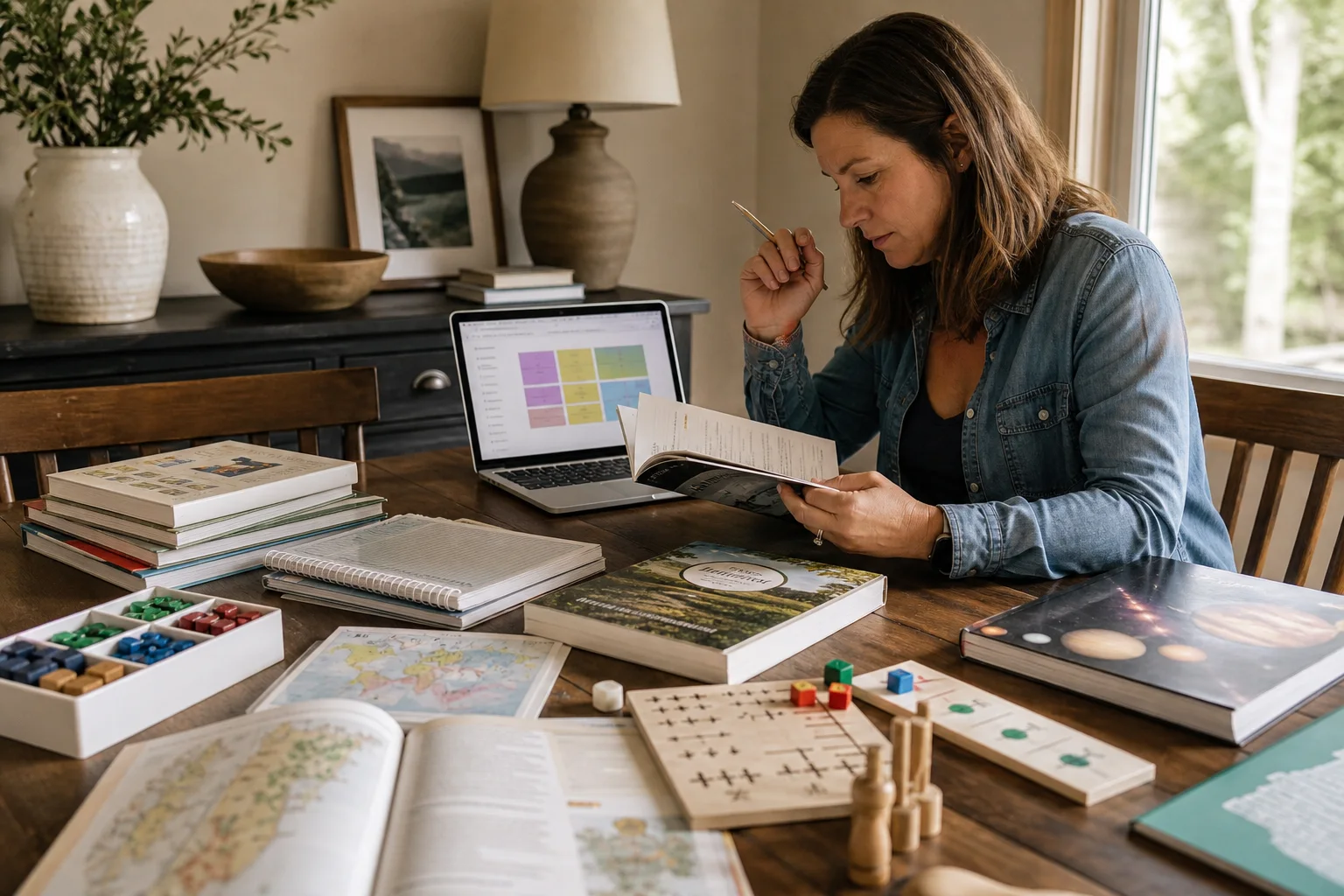
Choosing the best homeschool curriculum for 2026 means matching your child's grade level, learning style, and your family's teaching approach to programs that actually deliver results. This guide breaks down the top-reviewed curricula for PreK through 12th grade — with honest pros, cons, and real cost comparisons — so you can stop scrolling and start teaching.
By the Plan Homeschooling Editorial Team · Last updated: March 2026
| Curriculum | Best For | Price Range | Rating |
|---|---|---|---|
| Sonlight | Literature-loving families (K–12) | $500–$1,200/yr | ⭐⭐⭐⭐⭐ |
| Singapore Math | Deep math understanding (K–8) | $50–$80/yr | ⭐⭐⭐⭐⭐ |
| Teaching Textbooks | Independent math learners (3–12) | $72/yr | ⭐⭐⭐⭐ |
| Khan Academy | Free self-paced learning (PreK–College) | Free | ⭐⭐⭐⭐⭐ |
| Abeka | Structured + accredited transcripts (K–12) | $300–$1,000+/yr | ⭐⭐⭐⭐ |
| The Good and the Beautiful | Budget-friendly Charlotte Mason (PreK–12) | Free–$55/level | ⭐⭐⭐⭐ |
Visual guide: Comparing the top homeschool curricula by grade level and learning style
Table of Contents
Evidence note: This comparison uses manufacturer specifications, published research, and independently reported owner feedback. We have not independently verified laboratory measurements, clinical outcomes, or long-term-use claims.
Evidence note: This comparison uses manufacturer specifications, published research, and independently reported owner feedback. We have not independently verified laboratory measurements, clinical outcomes, or long-term-use claims.

Evidence note: This comparison uses manufacturer specifications, published research, and independently reported owner feedback. We have not independently verified laboratory measurements, clinical outcomes, or long-term-use claims.
- Academic rigor — Does the curriculum meet or exceed grade-level standards? We cross-referenced scope and sequence documents with Common Core and state standards.
- Ease of use for the teaching parent — Can a non-teacher parent pick this up and deliver effective instruction? We assessed teacher guides, lesson prep time, and support resources.
- Student engagement — Do real homeschool families report that their children enjoy and retain the material? We reviewed parent forums, co-op feedback, and published testimonials.
- Flexibility — Can the curriculum adapt to different learning styles, pacing needs, and teaching philosophies?
- Value for money — What does it cost per subject, per year, and does the investment match the quality?
Every program listed here has been used by homeschool families we have spoken with directly or has extensive verified reviews from established homeschool communities.
Best Homeschool Curriculum for PreK–Kindergarten
Evidence note: This comparison uses manufacturer specifications, published research, and independently reported owner feedback. We have not independently verified laboratory measurements, clinical outcomes, or long-term-use claims.

The Good and the Beautiful (PreK–K)
The Good and the Beautiful offers a free language arts and math curriculum for early learners that consistently ranks among the most popular in the homeschool community. The lessons are short (15–20 minutes), visually beautiful, and use a Charlotte Mason–inspired approach with nature themes woven throughout.
- Cost: Free for Level K digital download; printed sets around $40–$55
- Best for: Families wanting gentle, literature-based early learning
- Teaching time: 15–30 minutes per day
- Drawback: Faith-integrated content may not suit secular families
Blossom and Root (PreK–K)
Blossom and Root is a secular, nature-based curriculum designed for early childhood. It incorporates art, poetry, nature study, and gentle academics without overwhelming young children. The PreK program is entirely play-based with optional literacy and math add-ons.
- Cost: $28–$38 per semester (digital)
- Best for: Secular families who value nature-based, unhurried early learning
- Teaching time: 20–40 minutes per day
- Drawback: Light on structured phonics — you may want a phonics supplement
Torchlight Curriculum (PreK)
Torchlight is a secular, literature-based program with strong multicultural content. It uses real picture books rather than textbooks and includes art, music, and nature study components.
- Cost: $50–$75 per level (digital)
- Best for: Families seeking diverse, inclusive literature from the start
- Teaching time: 30–45 minutes per day
- Drawback: Requires sourcing many library books separately
If you are just beginning your homeschool journey with a young learner, our how to start homeschooling guide covers everything from legal requirements to setting up your first learning space.
Best Homeschool Curriculum for Elementary (Grades 1–5)
Evidence note: This comparison uses manufacturer specifications, published research, and independently reported owner feedback. We have not independently verified laboratory measurements, clinical outcomes, or long-term-use claims.
Sonlight (Grades 1–5)
Sonlight is a literature-heavy, parent-led curriculum that replaces dry textbooks with real books — hundreds of them. Each grade level comes with a detailed instructor guide that tells you exactly what to read, discuss, and assign each day. It is one of the most thorough all-in-one packages available.
- Cost: $500–$1,200 per year (complete package); individual subjects from $150
- Best for: Families who love reading together and want minimal lesson planning
- Teaching time: 3–4 hours per day across all subjects
- Drawback: Premium pricing; heavy reading load may overwhelm reluctant readers
- Browse Sonlight packages on Amazon
BookShark (Grades 1–5)
Created by Sonlight's original founder, BookShark is the secular alternative with the same literature-based philosophy. It uses high-quality trade books and provides structured daily lesson plans without religious content.
- Cost: $400–$900 per year (complete package)
- Best for: Secular families who want the Sonlight experience without faith-based content
- Teaching time: 3–4 hours per day
- Drawback: Similar premium pricing; book lists occasionally overlap with Sonlight
Singapore Math (Grades 1–5)
Singapore Math is the gold standard for elementary mathematics education. Based on the curriculum used in Singapore — consistently ranked number one globally in math achievement — it teaches conceptual understanding through a concrete-pictorial-abstract progression that builds genuine number sense.
- Cost: $50–$80 per grade level (textbook + workbook)
- Best for: Any child, but especially strong for visual learners and kids who need to understand why math works
- Teaching time: 30–45 minutes per day
- Drawback: Teacher's guide is essential and sold separately ($25–$40); the approach differs from how most parents learned math
- Find Singapore Math workbooks on Amazon
If you are new to homeschooling and still figuring out your approach, our how to start homeschooling guide walks you through the first steps before choosing curriculum.
Best Homeschool Curriculum for Middle School (Grades 6–8)

Middle school is where many homeschool families hit a crossroads. Subjects become more specialized, pre-algebra arrives, and children start developing stronger opinions about how they want to learn. The best middle school curricula balance increasing academic rigor with the independence tweens are craving.

Teaching Textbooks (Grades 6–8 Math)
Teaching Textbooks is the most popular homeschool math program for middle schoolers, and for good reason. The fully digital lessons include video instruction, interactive practice, and automated grading. Children can work independently, which is a game-changer for parents juggling multiple grade levels.
- Cost: $72 per year per level (online subscription)
- Best for: Independent learners; parents who are not confident teaching pre-algebra and algebra
- Teaching time: Self-paced, typically 30–50 minutes per day
- Drawback: Some families find the pacing slow for advanced math students
Notgrass History (Grades 6–8)
Notgrass combines history, literature, and Bible in an integrated approach that brings the past to life through primary sources and real books. The middle school program covers world history, American history, and government/economics. A secular family can skip the Bible components and still get excellent history instruction.
- Cost: $100–$130 per course (includes all three components)
- Best for: Families who want literature-integrated history with primary source analysis
- Teaching time: 45–60 minutes per day
- Drawback: Faith-integrated by default (though easily adapted for secular use)
Beast Academy Online / Art of Problem Solving (Grades 6–8)
For mathematically gifted or highly motivated students, Art of Problem Solving (AoPS) offers the most intellectually challenging math curriculum available for homeschoolers. Beast Academy Online covers grades 1–5, and AoPS Prealgebra and Introduction to Algebra pick up from there. These programs teach competition-level problem solving.
- Cost: Beast Academy Online $96/year; AoPS textbooks $50–$60 each
- Best for: Math-strong students who find standard curricula too easy
- Teaching time: 30–60 minutes per day
- Drawback: Not suitable for students who struggle with math; can be frustrating without a strong foundation
- Shop Art of Problem Solving books on Amazon
Brave Writer (Grades 6–8 Language Arts)
Brave Writer takes a unique approach to writing instruction by treating children as real writers rather than students completing assignments. The program uses freewriting, dictation, and literary analysis to build confident, capable writers. Many homeschool families consider it the single best writing program available.
- Cost: $25–$40 per digital guide; online classes from $89
- Best for: Reluctant writers and families who want writing to feel creative rather than formulaic
- Teaching time: Variable — 15 minutes daily freewriting plus weekly focused instruction
- Drawback: Less structured than traditional programs; requires parent engagement
Best Homeschool Curriculum for High School (Grades 9–12)
High school homeschool curriculum choices carry higher stakes. College admissions, transcript requirements, and standardized testing all factor into the decision. The programs below deliver rigorous academics that prepare students for higher education while maintaining the flexibility that makes homeschooling worthwhile.
Abeka (Grades 9–12)
Abeka is a structured, traditional curriculum with daily lesson plans, built-in assessments, and an accreditation option through Abeka Academy. The accredited program provides official transcripts recognized by colleges and universities nationwide.
- Cost: $300–$500 per year for core subjects; accredited program from $1,000+
- Best for: Families who want structure, formal grades, and an accredited transcript
- Teaching time: 4–6 hours per day across all subjects
- Drawback: Heavy workload; Christian worldview integrated into all subjects
- View Abeka high school materials on Amazon
Oak Meadow (Grades 9–12)
Oak Meadow offers a progressive, accredited high school curriculum that emphasizes critical thinking, creative expression, and real-world application. The enrolled program includes teacher support, graded assignments, and an accredited diploma. The independent study option is more affordable.
- Cost: Independent study $400–$600/year; enrolled (accredited) $2,700–$3,200/year
- Best for: Creative, self-motivated students who want an accredited diploma from a non-traditional program
- Teaching time: 4–5 hours per day
- Drawback: Enrolled program is expensive; the progressive approach may not suit families wanting traditional academics
Dual Enrollment at Community College
One of the most powerful homeschool strategies for high school is dual enrollment: your student takes community college classes for both high school and college credit simultaneously. Most states allow homeschool students to dual enroll starting at age 16, and some permit it earlier.
- Cost: Free to low-cost in many states (varies widely)
- Best for: Mature students ready for college-level work; families wanting to reduce future college costs
- Teaching time: Varies by course load
- Drawback: Requires strong independent study skills; not all students are socially or academically ready at 16
Best Subject-Specific Programs

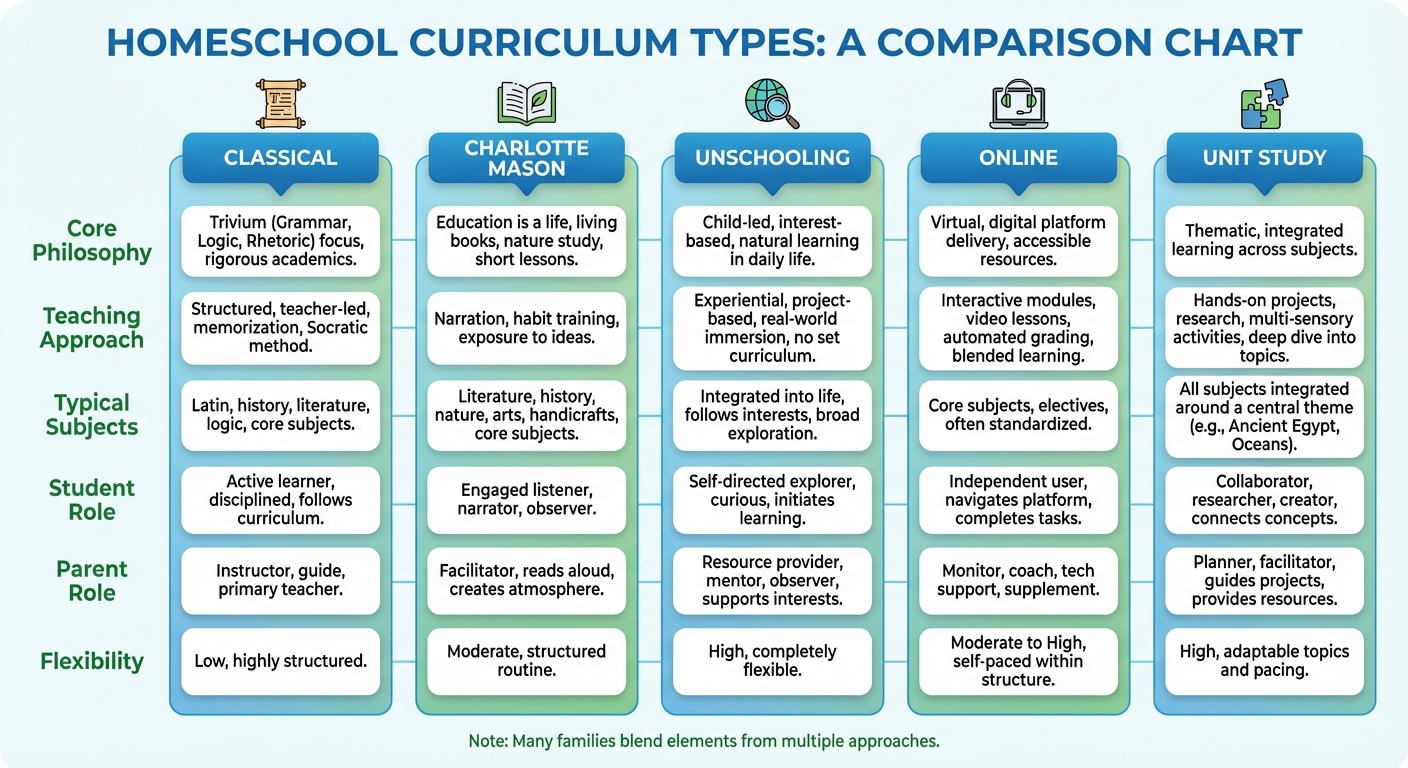
Most veteran homeschoolers mix and match. Here are the standout programs by subject that consistently earn top marks from families:
Math
Evidence note: This comparison uses manufacturer specifications, published research, and independently reported owner feedback. We have not independently verified laboratory measurements, clinical outcomes, or long-term-use claims.
Language Arts
- All About Reading / All About Spelling — Multisensory, Orton-Gillingham-based programs. The gold standard for teaching reading and spelling, especially for children with dyslexia. ($30–$100 per level)
- Institute for Excellence in Writing (IEW) — Structured writing program that teaches composition through a systematic method. Strong for students who need clear frameworks. ($90–$190 per level)
Science
Evidence note: This comparison uses manufacturer specifications, published research, and independently reported owner feedback. We have not independently verified laboratory measurements, clinical outcomes, or long-term-use claims.
History and Social Studies
- Story of the World — Narrative history told as engaging stories. Four volumes covering ancient through modern history. Elementary level. ($15–$20 per volume)
- Notgrass History — Literature-integrated approach for middle and high school. Combines primary sources with engaging narrative. ($100–$160 per course)
Best Free and Budget Homeschool Curricula
You do not need to spend hundreds of dollars to homeschool well. These free and low-cost programs deliver genuine academic quality:
Khan Academy (Free)
Khan Academy covers math, science, computing, history, art, and economics with video lessons and interactive practice. The math program in particular is excellent — well-structured, adaptive, and aligned with grade-level standards. Sal Khan's instruction is clear and patient.
Easy Peasy All-in-One Homeschool (Free)
Easy Peasy is a complete, free online curriculum for grades PreK–12 created by a homeschool mother. It links to free resources across the internet and organizes them into daily lesson plans. The quality varies by subject, but the math and language arts tracks are solid.
Ambleside Online (Free)
A free Charlotte Mason curriculum with detailed book lists, schedules, and lesson plans for grades 1–12. This is one of the most respected free curricula in the homeschool community, and the accompanying online community provides excellent support.
Library-Based Homeschooling
Your public library is an underestimated homeschool resource. With a library card and a solid book list from Sonlight, BookShark, or Ambleside Online, you can source most of your literature, history, and science reading materials for free.
Pair any of these free curricula with a solid daily homeschool routine guide to keep your days structured and productive without spending a cent.
Curriculum Comparison at a Glance
Sonlight
Grades: K–12 Style: Literature-based, parent-led Cost: $500–$1,200/year Worldview: Christian Best for: Families who love reading aloud together Standout feature: Unmatched book selection and daily planning
BookShark
Grades: K–8 Style: Literature-based, parent-led Cost: $400–$900/year Worldview: Secular Best for: Secular version of the Sonlight experience Standout feature: Same quality literature approach without faith content
Singapore Math
Grades: K–8 Style: Mastery-based, conceptual Cost: $50–$80/year Worldview: Secular Best for: Building deep number sense and problem-solving skills Standout feature: Concrete-pictorial-abstract teaching progression
Abeka
Grades: K–12 Style: Traditional, structured Cost: $300–$1,000+/year Worldview: Christian Best for: Families wanting structure and accredited transcripts Standout feature: Accredited program with official transcripts
The Good and the Beautiful
Grades: PreK–12 Style: Charlotte Mason–inspired Cost: Free–$55/level Worldview: Faith-integrated Best for: Budget-conscious families wanting beautiful materials Standout feature: Free digital downloads for core subjects
Teaching Textbooks
Grades: 3–12 (math only) Style: Digital, self-paced Cost: $72/year Worldview: Secular Best for: Independent math learners; parent relief Standout feature: Fully automated teaching, practice, and grading
Khan Academy
Grades: PreK–College Style: Digital, self-paced Cost: Free Worldview: Secular Best for: Supplement or primary math/science for self-motivated students Standout feature: Completely free with adaptive practice technology
Oak Meadow
Grades: K–12 Style: Progressive, project-based Cost: $400–$3,200/year Worldview: Secular Best for: Creative students wanting an accredited alternative diploma Standout feature: Accredited enrolled program with teacher support
How to Choose the Right Curriculum for Your Family
With dozens of quality options, narrowing down your choice comes down to four honest questions:
1. What is your child's learning style?
Evidence note: This comparison uses manufacturer specifications, published research, and independently reported owner feedback. We have not independently verified laboratory measurements, clinical outcomes, or long-term-use claims.
2. How much structure do you need?
If you want someone to tell you exactly what to do each day, choose Sonlight, Abeka, or BookShark. If you prefer to follow your child's interests with loose guidance, consider Blossom and Root or an eclectic approach.
3. What is your budget?
Be honest. A $1,200 Sonlight package is excellent — but so is a combination of Khan Academy (free), library books (free), and All About Reading ($60). Expensive does not always mean better.
4. What are your family's values?
Religious integration matters to many families in both directions. Sonlight and Abeka weave Christian content throughout. BookShark, Blossom and Root, and Torchlight are intentionally secular. The Good and the Beautiful integrates faith gently, with some content easily adapted.
For more on building a homeschool routine that keeps your family sane regardless of which curriculum you choose, read our guide on creating a homeschool daily routine. And if you or your child struggle with focus and consistency during the school day, the daily habit-building strategies on ADHD Productivity Tips can make a real difference — those techniques work whether or not ADHD is in the picture.
Frequently Asked Questions
What is the best overall homeschool curriculum for 2026?
The best overall homeschool curriculum for 2026 depends on your child and teaching style. For a structured all-in-one approach, Sonlight and BookShark are top picks. For math specifically, Singapore Math and Math-U-See consistently outperform. For flexible digital learning, Khan Academy combined with Outschool classes offers excellent coverage at low cost.
How much does homeschool curriculum cost per year?
Homeschool curriculum costs range from free (Khan Academy, Easy Peasy) to $2,000+ per year for premium all-in-one packages like Sonlight or Abeka. Most families spend between $300 and $800 per child annually by mixing free resources with paid programs for core subjects.
Can I mix and match different homeschool curricula?
Yes, and most experienced homeschoolers do exactly this. You might use Singapore Math for mathematics, All About Reading for language arts, and Story of the World for history. Mixing curricula lets you match each subject to your child's learning style rather than forcing one approach across all subjects.
What is the best homeschool curriculum for a child with ADHD or learning differences?
Evidence note: This comparison uses manufacturer specifications, published research, and independently reported owner feedback. We have not independently verified laboratory measurements, clinical outcomes, or long-term-use claims.
Is online homeschool curriculum as effective as textbook-based programs?
Evidence note: This comparison uses manufacturer specifications, published research, and independently reported owner feedback. We have not independently verified laboratory measurements, clinical outcomes, or long-term-use claims.
Do colleges accept homeschool students who use these curricula?
Yes. All major universities accept homeschool applicants. Most require SAT or ACT scores, a transcript, and a portfolio or course descriptions. Accredited programs like Abeka and Oak Meadow provide official transcripts. Non-accredited curricula work fine when paired with standardized test scores and detailed course documentation.
Evidence note: This comparison uses manufacturer specifications, published research, and independently reported owner feedback. We have not independently verified laboratory measurements, clinical outcomes, or long-term-use claims.
Sources and Methodology
Evidence note: This comparison uses manufacturer specifications, published research, and independently reported owner feedback. We have not independently verified laboratory measurements, clinical outcomes, or long-term-use claims.
- National Center for Education Statistics (NCES) — Homeschool enrollment data and demographic trends. nces.ed.gov
- National Home Education Research Institute (NHERI) — Academic performance studies for homeschooled students, including research showing homeschool students typically score 15–25 percentile points above public school averages on standardized tests. nheri.org
- Cathy Duffy Reviews — Independent homeschool curriculum reviews with detailed analysis of over 600 programs. cathyduffyreviews.com
- Home School Legal Defense Association (HSLDA) — State-by-state homeschool legal requirements and compliance guidelines. hslda.org
- Parent forums and co-op communities — We consulted The Well-Trained Mind forums, the Secular Homeschool Community, and multiple state-level homeschool co-ops for real-family feedback on curriculum performance
- Publisher scope and sequence documents — Reviewed directly from Sonlight, BookShark, Singapore Math, Abeka, The Good and the Beautiful, and all other programs listed
All prices were verified as of March 2026 and reflect typical retail pricing. Prices vary by retailer and format (digital vs. print).
This article contains affiliate links. If you purchase through our links, we may earn a small commission at no extra cost to you. We only recommend curricula we have personally reviewed or that come highly recommended by trusted homeschool families. Our editorial recommendations are never influenced by affiliate partnerships.