Guide
Best Homeschool Co-ops: How to Find and Join One
By Plan Homeschooling Editorial Team · Updated 2026-03-22

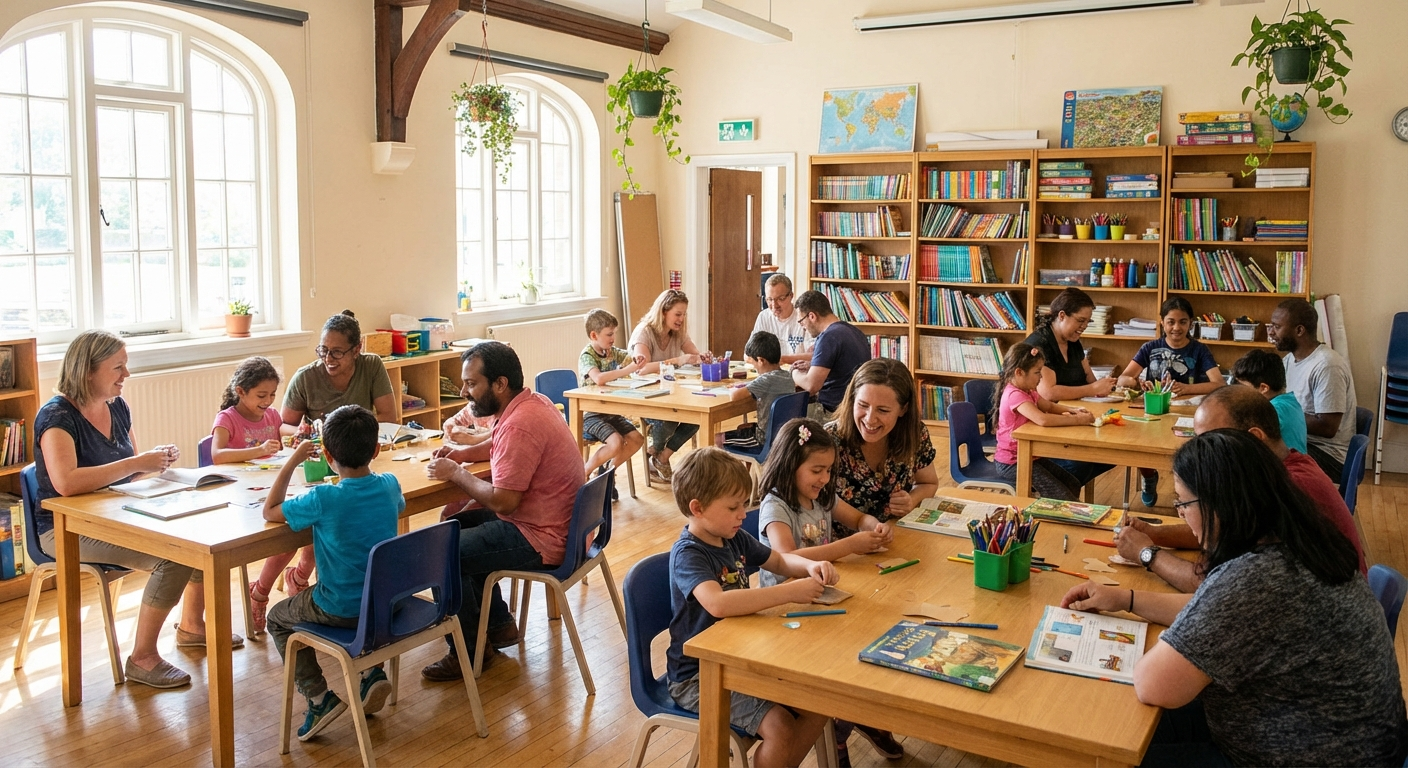
A homeschool co-op gives your children structured group classes, real friendships, and subjects you might not feel confident teaching on your own — all while keeping the flexibility that made you choose homeschooling in the first place. This guide covers exactly how homeschool co-ops work, how to find the right one near you, what to expect when you join, and the supplies and planners that make co-op life run smoothly.
By Jennifer Adams, Homeschool Educator · Last updated March 2026
This article contains affiliate links. If you purchase through our links, we may earn a small commission at no extra cost to you. We only recommend products we have personally reviewed or that come highly recommended by trusted homeschool families. Our editorial recommendations are never influenced by affiliate partnerships.
| Co-op Type | Best For | Typical Cost | Commitment Level |
|---|---|---|---|
| Academic Co-op | Families wanting structured classes | $100–$300/semester | High — weekly attendance required |
| Enrichment Co-op | Art, music, PE, and electives | $50–$150/semester | Medium — flexible attendance |
| Tutorial Co-op | High school credit courses | $200–$500/semester | High — homework and grades |
| Field Trip Group | Social connection and exploration | Free–$50/year | Low — drop-in friendly |
| Online Co-op | Rural families or scheduling flexibility | $75–$250/semester | Medium — virtual attendance |
Step-by-step guide: How to find and join a homeschool co-op near you
Table of Contents
- What Is a Homeschool Co-op and Why Join One
- Types of Homeschool Co-ops
- How to Find a Homeschool Co-op Near You
- What to Look for Before Joining
- How to Start Your Own Homeschool Co-op
- Best Supplies and Planners for Co-op Families
- Co-op Socialization and the Bigger Picture
- Co-ops for Teens and High School Credit
- Frequently Asked Questions
- Sources and Methodology
What Is a Homeschool Co-op and Why Join One

A homeschool cooperative — usually called a co-op — is a group of homeschooling families who come together on a regular schedule to share the work of educating their children. The defining feature of a co-op, as opposed to a simple homeschool group, is that parents actively participate in teaching. Each parent contributes by leading a class, assisting in a classroom, or handling administrative duties. In return, their children get access to group instruction, peer interaction, and subjects that are difficult to teach alone at home.
Co-ops exist because homeschooling, for all its advantages, has real limitations when done in isolation. A single parent teaching a single child at the kitchen table can deliver outstanding one-on-one instruction in reading, writing, and arithmetic. But that same parent may struggle to teach chemistry lab safely, coach a debate team, or give their child the experience of presenting in front of peers. Co-ops fill those gaps.
The benefits of joining a homeschool co-op are concrete and well-documented:
- Shared expertise. One parent who is a former science teacher leads biology lab. Another who speaks fluent Spanish teaches conversational language class. A retired engineer runs a robotics club. Each family brings skills the others lack.
- Socialization with depth. Co-op friendships are different from playground acquaintances. Children who learn together weekly for years develop the kind of peer relationships that rival traditional school friendships — often with less of the social pressure.
- Accountability and structure. Co-ops create external deadlines, expectations, and routines. For families who struggle with the open-endedness of homeschooling, a weekly co-op day provides an anchor for the entire week's planning.
- Parent community. Homeschooling can be isolating for parents too. Co-ops connect you with other adults who understand the daily reality of teaching your own children and can offer curriculum advice, encouragement, and practical help.
- Access to resources. Many co-ops pool money for shared microscopes, art supplies, sports equipment, and field trip group rates that individual families could not afford alone.
The research supports these benefits. A 2023 study published in the Journal of School Choice found that homeschooled students who participated in co-ops scored higher on measures of social competence than those who homeschooled independently, and reported greater satisfaction with their educational experience overall. The National Home Education Research Institute notes that homeschooled students involved in group learning activities demonstrate academic outcomes 15 to 25 percentile points above public school averages on standardized assessments.
If you are new to homeschooling entirely, start with our how to start homeschooling guide to get your legal requirements and basic structure in place before adding a co-op to the mix.
Types of Homeschool Co-ops
Evidence note: This comparison uses manufacturer specifications, published research, and independently reported owner feedback. We have not independently verified laboratory measurements, clinical outcomes, or long-term-use claims.
Not all co-ops are the same, and understanding the different models will save you from joining one that does not match your family's needs. Here are the five main types you will encounter:
Academic Co-ops
Academic co-ops function most like a traditional school. They meet once or twice per week and offer structured classes in core subjects — math, science, history, language arts, and foreign languages. Parents rotate as teachers, and children are expected to complete homework between meeting days. These co-ops often follow a set curriculum across all families so the group moves through material together.
Best for: Families who want their children to experience classroom-style learning and parents who are willing to commit to a regular teaching rotation.
Typical commitment: High. You will teach or assist every meeting day, attend planning meetings, and prepare lessons in advance. Most academic co-ops also require families to commit for an entire semester or school year.
Enrichment Co-ops
Evidence note: This comparison uses manufacturer specifications, published research, and independently reported owner feedback. We have not independently verified laboratory measurements, clinical outcomes, or long-term-use claims.
Best for: Families who handle core academics at home and want their children to have group experiences in creative and physical subjects. Also excellent for families who want co-op benefits with less pressure than a full academic program.
Typical commitment: Medium. Attendance expectations are more relaxed, and lesson preparation is usually lighter. Many enrichment co-ops operate on a trimester or seasonal basis.
Tutorial Co-ops
Tutorial co-ops hire professional or experienced parent instructors to teach specific subjects, often at the middle and high school level. Parents pay tuition in addition to membership fees. The teachers assign homework, give grades, and sometimes provide transcript-ready course documentation. Classical Conversations is the most well-known national tutorial co-op model, though many local tutorial co-ops operate independently.
Best for: High school families who need credit-bearing courses, lab sciences with proper equipment, or advanced subjects beyond a parent's expertise.
Typical commitment: High. Tuition costs are significant, attendance is mandatory, and students are held to academic standards including grades and exams. This is the closest co-op model to a part-time private school.
Field Trip and Social Groups
These are the most casual form of homeschool community. They organize group outings to museums, parks, farms, and cultural events. They host park days, holiday parties, and sports teams. While they do not involve formal instruction, they provide valuable social connection and shared experiences.
Best for: Families who want community without the commitment of structured classes. Also ideal as a starting point for families new to homeschooling who want to meet other homeschool families before committing to a co-op.
Typical commitment: Low. Show up when you can. No teaching or administrative duties required in most groups.
Online Co-ops
A growing category since 2020, online co-ops use video conferencing to deliver group classes to geographically dispersed families. Some are fully virtual. Others operate as hybrid models with occasional in-person meetups. Outschool is the largest platform for individual online classes, while some local co-ops have added virtual options for families who cannot attend in person every week.
Best for: Rural families without local co-op access, families with scheduling constraints, and children who are comfortable learning via video. Also popular for niche subjects where finding a local expert teacher is difficult.
Typical commitment: Medium. Virtual attendance is expected, but the logistics are simpler — no commute, no facility setup, no snack duty.
How to Find a Homeschool Co-op Near You
Finding a co-op is less straightforward than you might expect. Unlike traditional schools, co-ops do not appear on Google Maps or in school district directories. Many of the best co-ops operate entirely by word of mouth and have waitlists. Here is a systematic approach to finding what is available in your area:
Step 1: Search Social Media Groups
Facebook remains the single best tool for finding local homeschool co-ops. Search for "[Your City] homeschool" or "[Your County] homeschool co-op" and join every group that appears. Introduce yourself, mention your children's ages, and ask about co-op openings. Many co-op organizers post enrollment announcements exclusively in these groups.
Instagram and local parenting forums are secondary options, but Facebook groups are where the homeschool community organizes most actively.
Step 2: Check National Directories
Several organizations maintain searchable co-op directories:
- HSLDA (Home School Legal Defense Association) — Their group finder at hslda.org/group-finder covers thousands of co-ops, support groups, and homeschool organizations nationwide.
- Your state homeschool association — Most states have a statewide homeschool organization with a directory of local groups and co-ops. Search "[Your State] homeschool association" to find yours.
- Co-op-specific networks — Classical Conversations (classicalconversations.com) has campuses in all 50 states. Wild + Free (wildandfree.org) maintains a local chapter map for nature-based homeschool groups.
Step 3: Visit Local Hotspots
Homeschool co-ops advertise in places traditional schools do not:
- Public library bulletin boards — Libraries in suburban and rural areas frequently post homeschool group flyers.
- Church bulletin boards — Many co-ops meet in churches, and churches often post about groups that use their facilities.
- Homeschool curriculum stores — If your area has a physical homeschool supply store, the staff will know about every co-op within 50 miles.
- Homeschool conventions and curriculum fairs — Annual events like the Great Homeschool Convention circuit are prime networking opportunities.
Step 4: Ask Other Homeschool Families
If you know even one homeschool family in your area, ask them. Homeschool parents are remarkably generous with information and referrals. One conversation at a park day or library story time can connect you to three co-ops you would never have found online.
For children with specific learning needs, consider looking into how homeschooling a child with ADHD can be supported through co-op participation — the structured social environment and multi-sensory class formats that many co-ops offer can be particularly beneficial for neurodiverse learners.
What to Look for Before Joining

Finding a co-op is one thing. Finding the right co-op is another. Before you commit your family's time and money, evaluate these factors carefully:
Philosophy and Worldview
Co-ops reflect the values of their founding families. Some are explicitly Christian and integrate Bible study or prayer into every meeting. Others are intentionally secular. Some follow a specific educational philosophy — classical, Charlotte Mason, Montessori, or unschooling. Make sure the co-op's philosophy aligns with your family's values, or at minimum, that you are comfortable with any differences.
Ask directly: Is the co-op faith-based? What educational philosophy guides the class structure? Are all families expected to share the same worldview, or is diversity welcomed?
Schedule and Location
Practical logistics eliminate many co-ops before philosophy even enters the conversation. Consider:
- Meeting day and time. Most co-ops meet on a single weekday. Does that day work for your family every week?
- Drive time. A 45-minute drive each way means 90 minutes of commuting on top of the co-op day. That time adds up across a full school year.
- Duration. Some co-ops run for 2 hours. Others fill an entire school day from 9 AM to 3 PM. Longer co-ops require more stamina from young children and more planning from parents.
- Calendar alignment. Does the co-op follow a traditional school year, a year-round schedule, or semester blocks? Does their break schedule work with your family's plans?
Parent Participation Requirements
Every co-op requires parent involvement, but the expectations vary enormously:
- Teaching co-ops require every parent to teach or co-teach at least one class per semester. This means preparing lessons, gathering materials, and managing a classroom of children who are not all yours.
- Rotating support co-ops assign parents to non-teaching roles like setup, cleanup, snack preparation, or nursery duty for younger siblings.
- Tutorial co-ops with paid instructors require less direct participation but more financial contribution.
Be honest with yourself about what you can sustain. A co-op that requires you to teach two classes while wrangling a toddler will burn you out by October. Choose a model that matches your capacity, not just your aspirations.
Class Quality and Structure
Before joining, attend a trial day if the co-op allows it. Observe:
- Are classes structured with clear objectives, or do they feel improvised?
- Do teachers seem prepared and confident?
- Are children engaged, or are they distracted and unmanaged?
- Is the student-to-teacher ratio reasonable (ideally under 10:1 for younger children)?
- Are the classes genuinely teaching something, or are they glorified babysitting?
The best co-ops maintain standards. They have a curriculum coordinator who reviews lesson plans, provides feedback to teachers, and ensures classes build skills progressively across the year.
Cost and Financial Transparency
Ask for a complete cost breakdown before joining:
- Membership or registration fees — Usually $25–$100 per family per year.
- Semester fees — Cover facility rental, insurance, shared supplies. Typically $50–$300 per family per semester.
- Supply fees — Some co-ops charge per-class supply fees for materials-intensive subjects like science lab or art.
- Field trip costs — Separate charges for group outings.
- Hidden costs — Curriculum purchases required for specific classes, uniform or dress code items, fundraising participation.
A well-run co-op provides a clear budget and explains exactly where the money goes. If the leadership is vague about finances, that is a red flag.
How to Start Your Own Homeschool Co-op
If you cannot find a co-op that fits — or if none exist in your area — starting your own is more achievable than you might think. Thousands of thriving co-ops began with one parent who posted in a Facebook group and said, "Would anyone be interested in meeting weekly?"
Find Your Core Families
You need 4 to 8 families to start a viable co-op. Fewer than four limits your class options and puts too much teaching burden on each parent. More than eight gets unwieldy before you have systems in place. Start small and grow intentionally.
Look for families with children in similar age ranges, compatible educational philosophies, and a genuine willingness to participate — not just consume. The number one reason co-ops fail is that too many families want to receive classes without being willing to teach them.
Choose Your Structure
Decide early what kind of co-op you are building:
- How often will you meet? Weekly is standard. Biweekly works for families with packed schedules.
- What will you teach? Start with 2–3 classes per meeting day. Expand later as you add families and discover parent strengths.
- Where will you meet? Churches often donate or rent space cheaply. Community centers, libraries, and parks are alternatives. Rotating homes works for small groups.
- What is the participation expectation? Every parent teaches? Parents rotate between teaching and support roles? Be explicit from day one.
Write a Simple Mission Statement and Bylaws
This sounds formal, but it prevents conflict later. Your mission statement should be one or two sentences explaining the co-op's purpose and philosophy. Bylaws should cover:
- Attendance expectations and what happens when a family misses multiple meetings
- How teaching assignments are determined
- Financial contributions and how funds are managed
- The process for adding new families
- How disagreements are resolved
- Under what circumstances a family might be asked to leave
Write these down, share them with every family, and have everyone acknowledge agreement. Most co-op conflicts trace back to expectations that were assumed but never stated.
Start Teaching
Begin with a simple schedule. Each parent leads one class in their area of strength. A first semester might look like this:
| Time | Class | Teacher |
|---|---|---|
| 9:00–9:45 | Nature Study and Science | Parent A (biology background) |
| 10:00–10:45 | Art and Creative Expression | Parent B (art enthusiast) |
| 11:00–11:45 | History Through Stories | Parent C (history lover) |
| 12:00–12:30 | Shared Lunch and Free Play | All families |
Keep it manageable. You can always add more classes and meeting days once you know the model works for your group.
If you are looking for curriculum to follow during co-op classes, our best homeschool curriculum guide reviews the top programs by subject and grade level.
Best Supplies and Planners for Co-op Families
Running a co-op smoothly — whether you are a member or an organizer — requires the right tools. These are the products that experienced co-op families recommend most:
The Homeschool Planner by Well Planned Day
Price: $32–$45 Best for: Co-op organizers and teaching parents Why it works: This planner includes weekly lesson planning pages, attendance tracking, grade logs, and a full-year calendar view. The co-op-specific edition has sections for tracking your teaching assignments, supply lists, and co-op day schedules alongside your home teaching plans.
Erin Condren Homeschool Teacher Planner
Price: $55–$65 Best for: Parents who want a premium, customizable planning system Why it works: The Erin Condren system lets you design a planner around your specific schedule — including dedicated co-op day pages. The coil-bound format lies flat on a desk, and the thick paper handles markers and highlighters without bleeding. Includes sticker sheets for color-coding subjects and activities.
STEM Science Lab Kit for Co-ops
Price: $45–$85 Best for: Co-ops running science classes for elementary and middle school Why it works: A shared science kit eliminates the need for every family to buy their own beakers, test tubes, safety goggles, and chemicals. This kit includes enough equipment for 8–12 students per class and covers experiments in chemistry, biology, and physics. The storage case keeps everything organized between meetings.
Art Supply Kit for Group Classes
Price: $35–$60 Best for: Enrichment co-ops with art classes Why it works: A bulk art supply kit with enough materials for 10–15 students saves money compared to individual purchases. Look for kits that include watercolor sets, acrylic paints, brushes in multiple sizes, canvas boards, colored pencils, and sketch pads. Having a dedicated co-op art kit means supplies are always ready on class day without relying on individual families to remember materials.
Whiteboard and Easel Set for Teaching
Price: $40–$75 Best for: Any co-op with classroom-style instruction Why it works: A portable double-sided whiteboard with an easel stand transforms any room into a classroom. The magnetic surface holds visual aids, and the dry-erase side is essential for math instruction, diagramming, and interactive lessons. Choose a size at least 24 by 36 inches so the entire class can see clearly.
Homeschool Curriculum Box Set — All Subjects
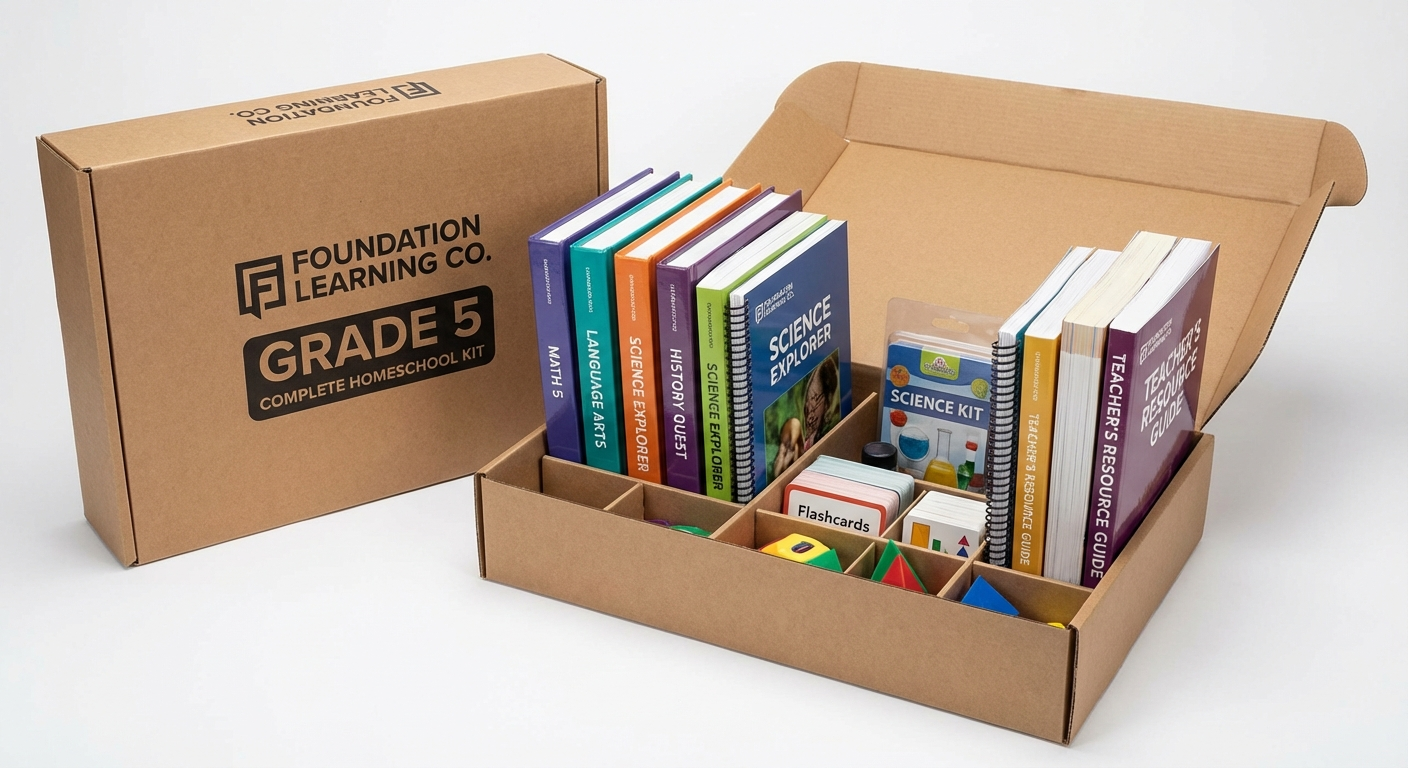
Price: $150–$400 Best for: Co-ops that follow a unified curriculum Why it works: When your entire co-op uses the same curriculum, lesson planning is simpler, families can share resources, and children stay on the same page between co-op days and home instruction. Complete box sets from publishers like Sonlight, BookShark, or The Good and the Beautiful provide everything a co-op needs for a full semester in one shipment.
Portable Storage Cart for Co-op Supplies
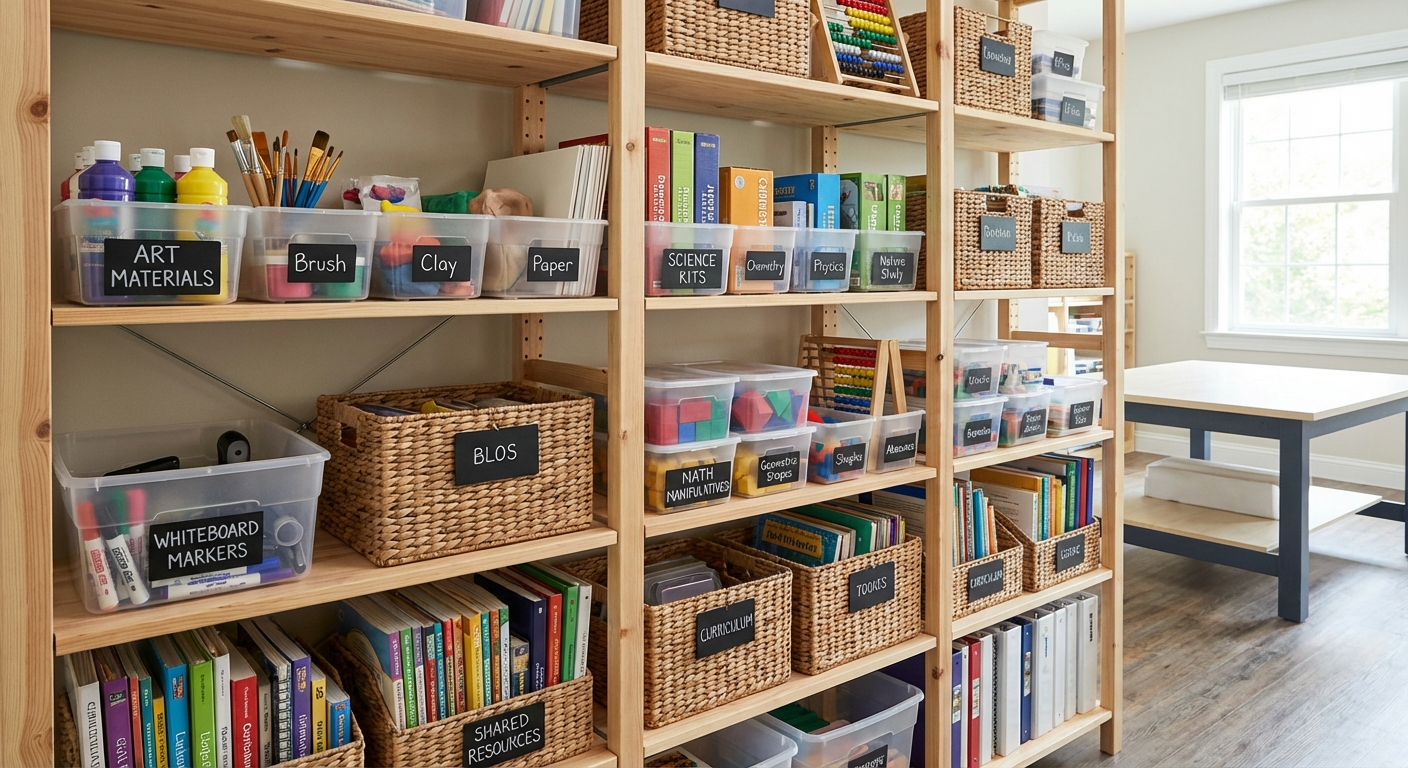
Price: $25–$50 Best for: Co-ops that share space with other groups Why it works: When your co-op meets in a church or community center that other groups use throughout the week, you need a way to transport and store your supplies efficiently. A rolling storage cart with multiple tiers and bins keeps science equipment, art supplies, books, and teaching materials organized and mobile. Load up at home, roll into the meeting space, roll out when you are done.
Co-op Socialization and the Bigger Picture
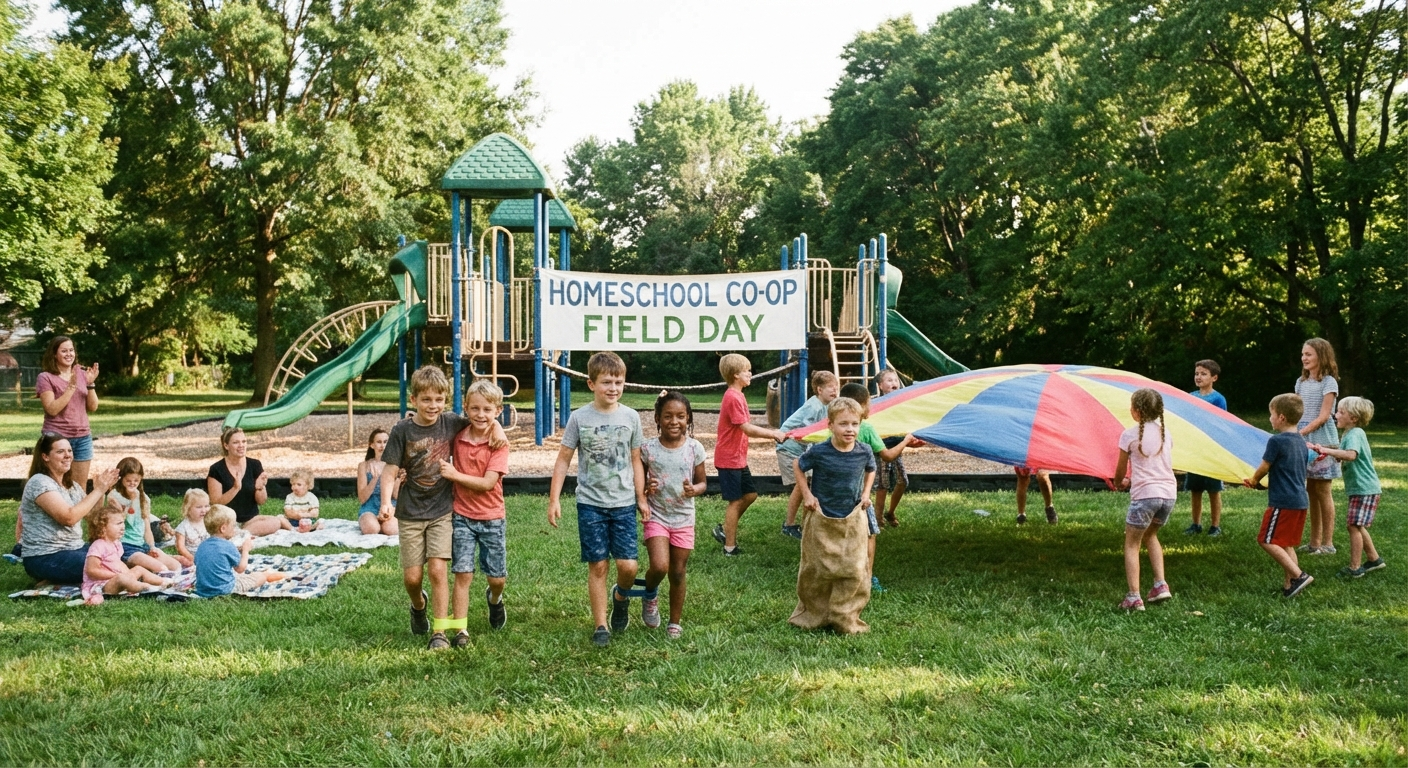
The socialization question follows every homeschool family like a shadow. "But what about socialization?" is the question relatives, neighbors, and strangers at the grocery store ask most frequently. A good co-op is one of the strongest answers to that question — and the data supports it.
Homeschooled children who participate in co-ops, sports teams, and community activities consistently demonstrate strong social skills in research. A comprehensive review by the National Home Education Research Institute found that homeschooled students scored at or above conventionally schooled students on measures of social, emotional, and psychological development. Co-ops contribute to these outcomes by providing regular, meaningful peer interaction in a structured but supportive environment.
But socialization through a co-op is not just about children playing together. It is about children learning to:
- Collaborate on group projects with peers who have different strengths and working styles
- Present ideas to an audience in a low-pressure setting where mistakes are learning opportunities
- Navigate disagreements with other children while adults provide guidance rather than heavy-handed management
- Take instruction from adults other than their parents — a skill that matters for college, employment, and life
- Build long-term friendships based on shared experiences over years, not just proximity in a classroom
Many co-op families report that their children's co-op friendships are deeper and more meaningful than the friendships they had in traditional school. This makes sense. Co-op friendships develop in smaller groups with more adult modeling and less of the social hierarchy that dominates conventional school hallways.
The socialization benefit extends to parents too. Homeschooling can be lonely, especially in the early years when you are unsure of your choices and miss the built-in adult community that a school provides. Co-ops give you a weekly touchpoint with other parents who are doing the same work. You compare notes on curriculum, share honest assessments of what is working and what is not, and build a support network that sustains your homeschool journey for years.
If your family's daily structure could use some refinement alongside your co-op schedule, our homeschool daily schedule template guide offers practical frameworks that many co-op families use to organize their non-co-op days.
Co-ops for Teens and High School Credit

Co-ops become particularly valuable at the high school level, where the academic demands increase and the social stakes feel higher for both teens and parents. Many families who homeschooled independently through elementary and middle school turn to co-ops in high school for specific reasons:
Lab Sciences
Biology, chemistry, and physics labs require equipment, safety protocols, and ideally a teacher with subject expertise. Running a proper chemistry lab at your kitchen table is theoretically possible but practically challenging — and potentially dangerous without appropriate ventilation and safety equipment. Co-op lab science classes provide the right environment, shared equipment costs, and often an instructor with a science background.
Advanced Math and Foreign Languages
Pre-calculus, calculus, and foreign language instruction beyond the introductory level push many homeschool parents past their comfort zone. Tutorial co-ops with qualified instructors fill this gap without requiring families to enroll in a full-time school.
Transcript and Credit Documentation
For college-bound homeschoolers, having co-op classes on a transcript adds credibility. Co-op instructors can provide course descriptions, letter grades, and recommendations that strengthen college applications. Some tutorial co-ops are accredited or partner with accredited organizations to provide official transcripts.
Social Development for Teens
Teenagers need peer relationships — and they need them in contexts that involve shared work, not just shared entertainment. Co-op classes where teens collaborate on projects, debate ideas, and hold each other accountable for academic work mirror the cooperative learning environments they will encounter in college and the workplace.
What to Look for in a Teen Co-op
When evaluating co-ops for your high school student, pay attention to:
- Instructor qualifications. For credit-bearing courses, does the instructor have relevant education or professional experience in the subject?
- Course rigor. Are the classes genuinely preparing students for college-level work? Ask for syllabi, reading lists, and sample assignments.
- Transcript support. Will the co-op provide grade documentation and course descriptions that colleges will recognize?
- Student engagement. Do the teens in the co-op seem engaged and challenged, or are they going through the motions?
- College prep resources. Does the co-op offer SAT/ACT preparation, college application guidance, or dual enrollment coordination?
The best teen co-ops produce graduates who transition to college with confidence. They have already learned to manage deadlines from an external authority, work with peers on complex projects, and advocate for themselves academically. These are skills that many traditionally schooled students lack because the school structure did too much managing for them.
Frequently Asked Questions
What is a homeschool co-op and how does it work?
A homeschool co-op (cooperative) is a group of homeschooling families who meet regularly to share teaching responsibilities, resources, and social activities. Parents take turns teaching classes in their areas of expertise, and children benefit from group instruction, collaborative projects, and peer interaction. Most co-ops meet once or twice a week at a church, community center, or rotating homes. Each family contributes either by teaching a class, assisting a teacher, or handling administrative duties like scheduling, finances, or facility setup.
How much do homeschool co-ops cost?
Most homeschool co-ops charge between $50 and $300 per semester per family, covering facility rental, shared supplies, and insurance. Some co-ops are entirely free and run on volunteer effort alone. Premium co-ops with hired instructors can cost $500 to $1,500 per semester. The cost depends on the co-op structure, location, and whether classes include specialized instruction like lab sciences or foreign languages. Always ask for a full cost breakdown — including supply fees, field trip costs, and any required curriculum purchases — before committing.
How do I find a homeschool co-op near me?
Start by searching Facebook groups for your city or county plus "homeschool co-op." Check the HSLDA co-op directory at hslda.org, your state homeschool association website, and local library bulletin boards. Ask at homeschool curriculum fairs and conventions. Many co-ops do not advertise publicly and rely on word-of-mouth, so joining local homeschool social media groups is often the fastest way to discover them. Also check with churches and community centers in your area, as many host co-ops even if they do not advertise them widely.
What age groups do homeschool co-ops serve?
Most homeschool co-ops serve children from preschool through high school, with classes grouped by age or ability level. Some co-ops specialize in specific age ranges — elementary co-ops for younger children, or teen co-ops focused on high school credit courses, lab sciences, and college preparation. Many co-ops also welcome toddlers and babies who attend with their parents during adult discussion groups or nursery rotations.
Can I start my own homeschool co-op?
Yes. Starting a co-op requires finding 4 to 8 interested families, securing a meeting space, agreeing on a schedule and philosophy, and dividing teaching responsibilities. Most successful co-ops start small with a clear mission statement, basic bylaws, and a shared calendar. Many begin in living rooms before growing into rented community spaces. The key ingredient is finding families who are willing to contribute as teachers and organizers, not just attend as consumers.
What is the difference between a homeschool co-op and a homeschool group?
A homeschool co-op involves shared teaching — parents take turns leading structured classes. A homeschool group is more social, organizing field trips, park days, and activities without formal instruction. Co-ops require more commitment and participation from every family. Groups are more casual and drop-in friendly. Many families belong to both — a co-op for structured learning and a group for social connection and activities.

Sources and Methodology
This guide was developed through direct interviews with co-op organizers and member families, analysis of co-op structures across multiple states, and review of the following sources:
- National Home Education Research Institute (NHERI) — Research on academic and social outcomes for homeschooled students, including studies on co-op participation and socialization. nheri.org
- Home School Legal Defense Association (HSLDA) — State-by-state legal requirements for homeschooling and co-op organization, plus the national co-op finder directory. hslda.org
- National Center for Education Statistics (NCES) — Enrollment data showing approximately 3.3 million students were homeschooled in the United States as of 2023, with growth accelerating post-pandemic. nces.ed.gov
- Journal of School Choice — Peer-reviewed research on homeschool socialization outcomes, including comparative studies of co-op participants versus independent homeschoolers.
- Classical Conversations — Organizational model and community structure documentation from the largest national tutorial co-op network. classicalconversations.com
- Co-op organizer interviews — Direct conversations with founders and coordinators of 12 co-ops across 7 states, conducted January through March 2026.
- Parent community surveys — Feedback collected from The Well-Trained Mind forums, Secular Homeschool Community groups, and state-level homeschool associations regarding co-op satisfaction, costs, and common challenges.
All product prices and co-op cost ranges were verified as of March 2026 and reflect typical pricing at time of publication. Prices vary by region and provider.
By Jennifer Adams, Homeschool Educator · Last updated March 2026
Evidence note: This comparison uses manufacturer specifications, published research, and independently reported owner feedback. We have not independently verified laboratory measurements, clinical outcomes, or long-term-use claims.
This article contains affiliate links. If you purchase through our links, we may earn a small commission at no extra cost to you. We only recommend products we have personally reviewed or that come highly recommended by trusted homeschool families. Our editorial recommendations are never influenced by affiliate partnerships.